ICU trajectorytime + context
observationsinterventions
BMFTR / Zukunft eHealth research consortium
Charité – Universitätsmedizin Berlin and University Medicine Essen are developing AI-supported dashboards for responsible antibiotic use and early recognition of circulatory instability in intensive care.
ICU stays
reference~200k
programme horizon
active36 mo
workstreams
linked4
Governance check
REACT / reviewableContext travels with the signal
Provenance, quality and clinical interpretation remain linked.
Research pathway / reviewable output
FHIR / interoperability
Source silos
FHIR resources
Mission
Routine Data Enhanced Analytics for Clinical Trajectories via FHIR-native interoperable Decision Support Systems in the ICU
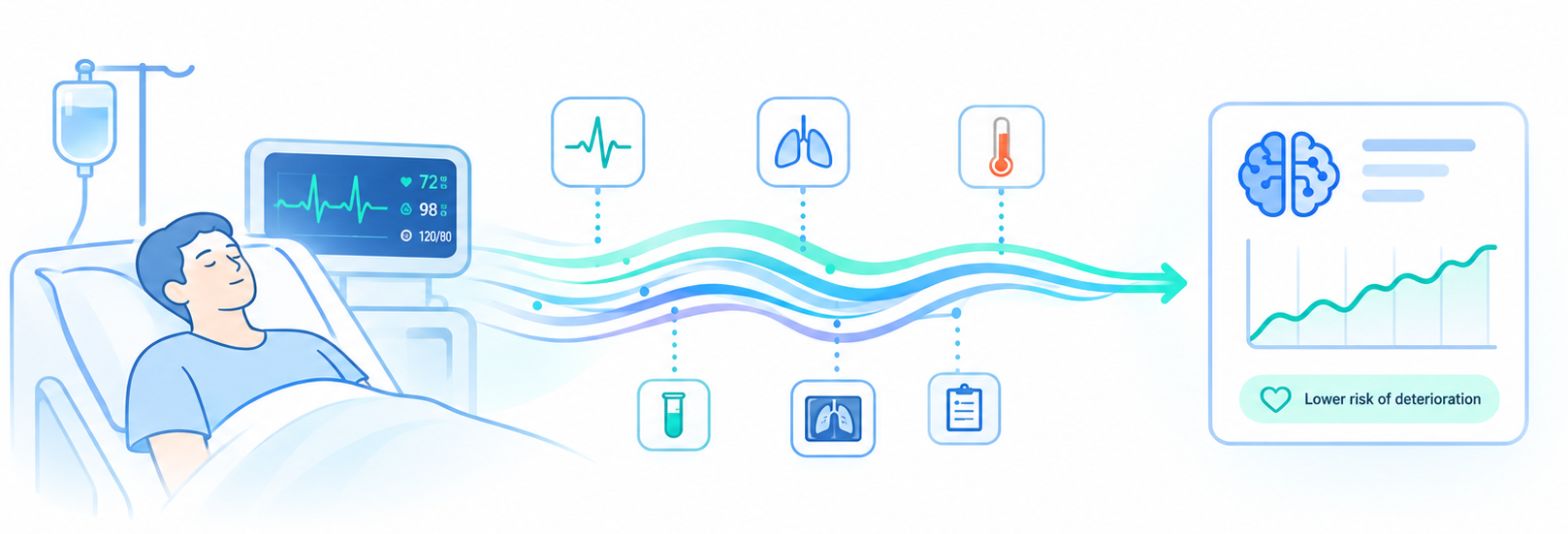
REACT brings measurements and clinical notes together to help intensive-care teams understand how a patient's condition changes over time. The goal is explainable support within existing workflows, ultimately in real time. Clinical judgement and responsibility remain with the treating clinicians.
Profiles, terminology mappings and reusable resources make ICU analytics transferable between systems.
Lineage, access control and quality checks keep every transformation inspectable and accountable.
The research outputs are shaped with intensive-care teams, not detached from the decisions they support.
Critical illness unfolds over time. REACT keeps the changing relationship between observations, interventions and clinical decisions visible.
Research foundation
Measurements and unstructured clinical notes are distributed across many ICU systems. REACT connects them using FHIR (Fast Healthcare Interoperability Resources), an international standard for exchanging health data, while preserving their source, timing and clinical meaning.
Research programme
REACT connects a shared data infrastructure with dashboards for antibiotic therapy and circulatory instability. Around 200,000 ICU stays provide the basis for development and retrospective evaluation before planned clinical testing.
Map heterogeneous ICU routine data into validated, provenance-rich FHIR resources and shared clinical concepts.
Assess data quality, temporal validity and model performance against retrospective ICU trajectories and clinical reference points.
Develop explainable dashboards with clinicians and prepare their evaluation in clinical workflows.
Workstreams / SP1–SP4
Data engineering, trustworthy infrastructure and clinically anchored decision support are developed as one connected research programme.
Event-driven ingestion of structured and unstructured ICU data, extraction into provenance-rich FHIR resources, and the development of interoperable web dashboards with clinician-facing CDSS components for reviewing trajectories and supporting decisions.
Scalable system architecture for reliable and auditable real-time data flows built on FHIR-native data management, automated conformance testing, policy-as-code data contracts, end-to-end transformation lineage, and fine-grained access control. Provides the technical backbone for all downstream CDSS components.
Developing an explainable dashboard to assess antibiotic guideline adherence and support de-escalation and therapy adjustment, using computable ICU concepts and patient context.
Developing temporal models and an explainable dashboard to highlight early warning signs of circulatory instability and show the signals behind each risk assessment.
REACT / clinician-facing evidence
Development and retrospective evaluation draw on around 200,000 ICU stays. A non-interventional pilot at Charité and University Medicine Essen is planned after the project to explore use in clinical workflows and inform possible later regulatory approval and sustained clinical use.
The dashboard is designed to assess guideline adherence and help teams consider antibiotic de-escalation and therapy adjustment, with explanations grounded in patient context.
Learning models are being developed to highlight early warning signs of circulatory instability. The dashboard will show the signals behind each assessment to support clinical judgement.
Research leadership / PIs
Four investigators from medical informatics and clinical medicine lead the work at Charité and University Medicine Essen. Together, they connect data infrastructure, clinical questions and evaluation with treating teams.
Principal investigator
Research focusRoutine-data integration & clinical dashboards

Principal Investigator and Consortium Coordination
Research focusTrustworthy infrastructure
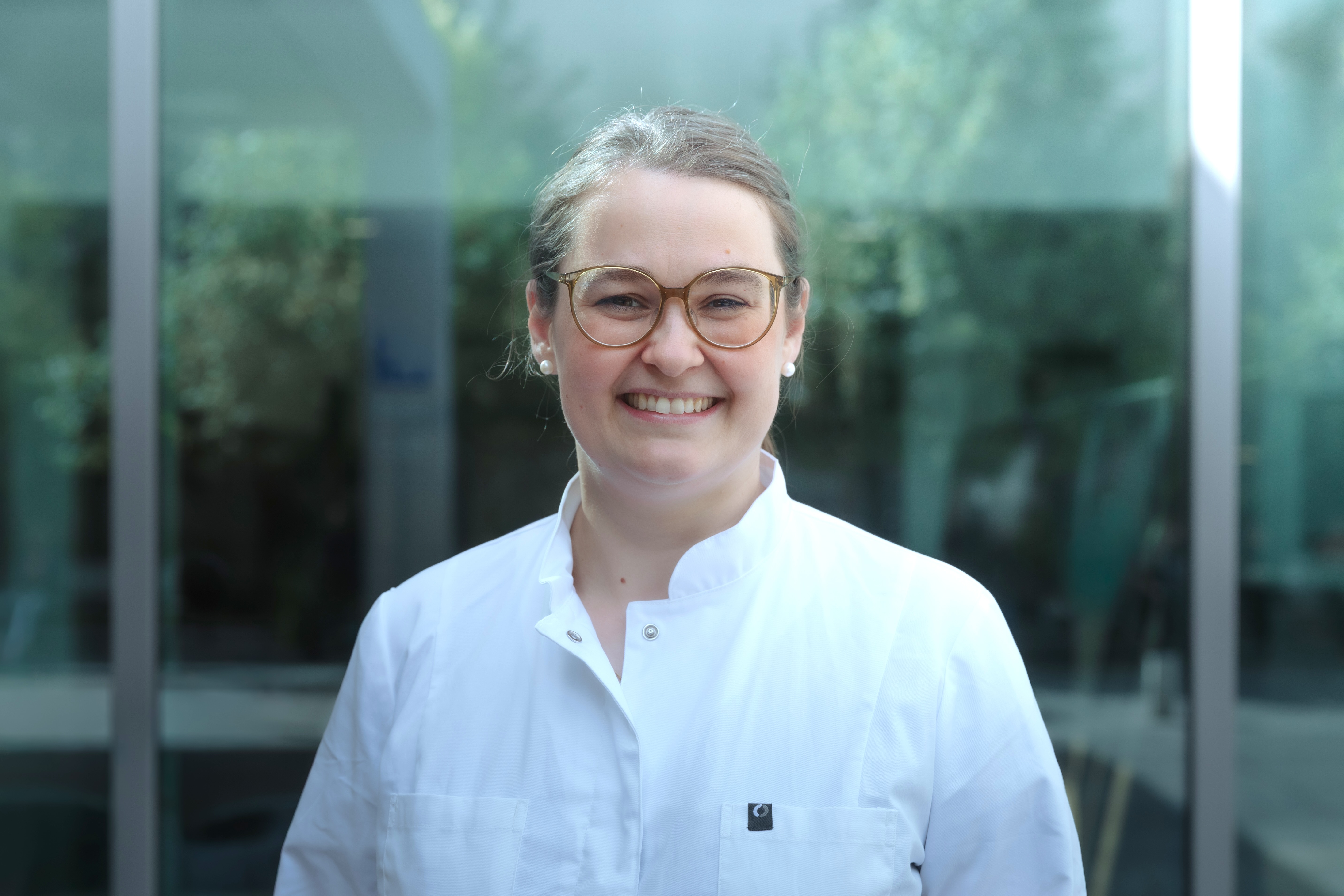
Principal investigator · Clinical lead
Research focusCritical Care Medicine / Antimicrobial stewardship

Principal investigator · Clinical lead
Research focusCritical Care Medicine / Hemodynamic trajectories
Supporters
A project with relevant supporters.

Charité – Universitätsmedizin Berlin

University Medicine Essen / IKIM

Firemetrics

Copra System

HL7 Deutschland

Interoperability Working Group

Elixion Medical